

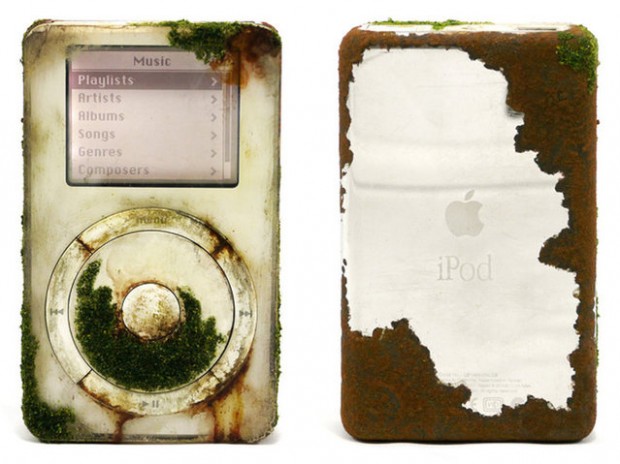
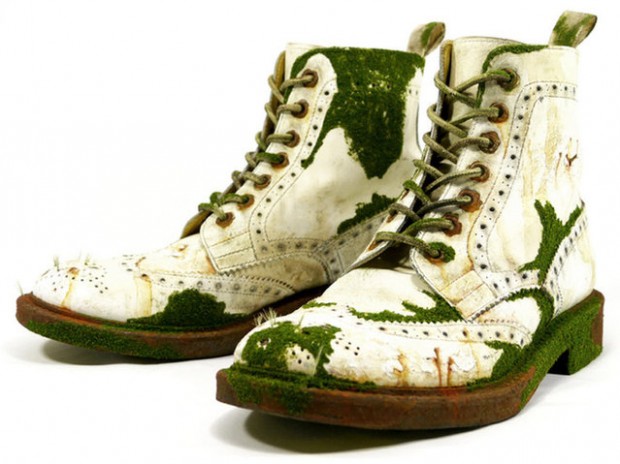
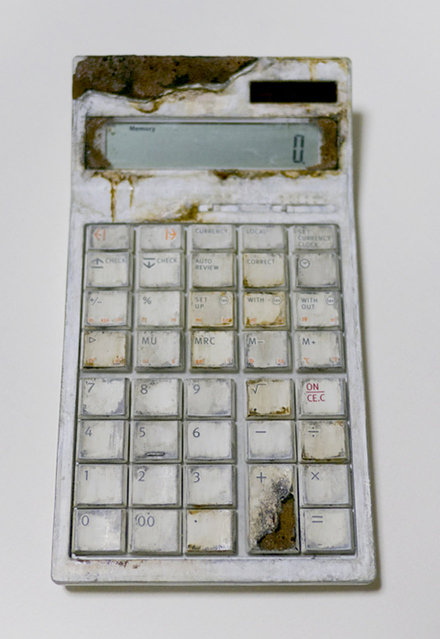
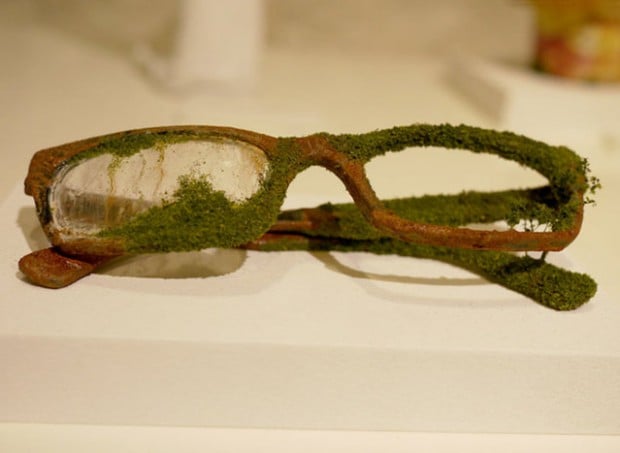
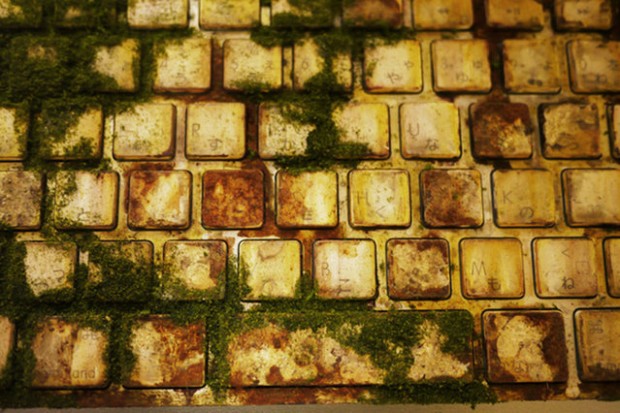
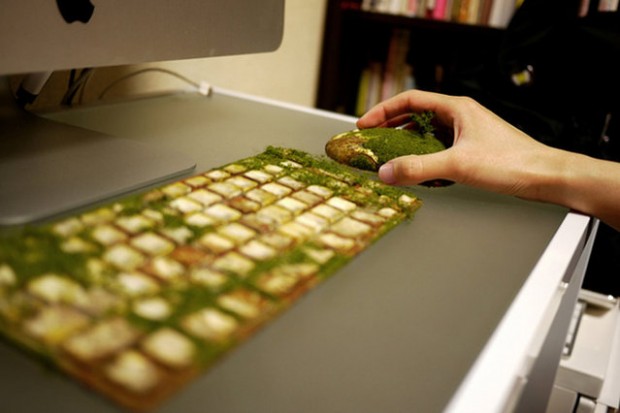
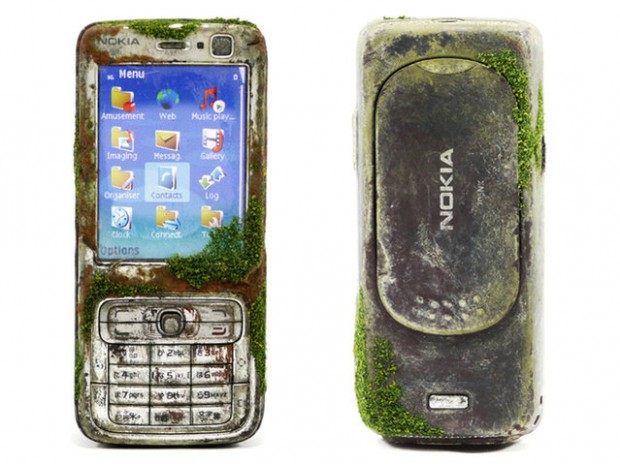
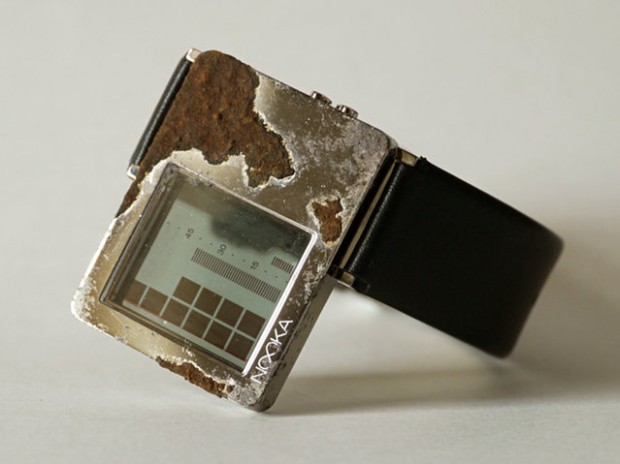
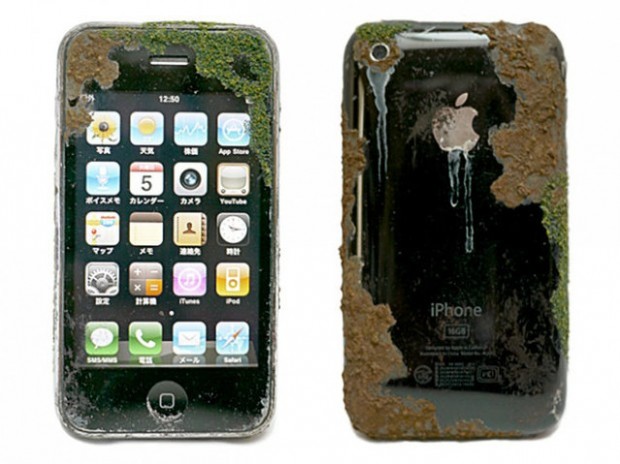
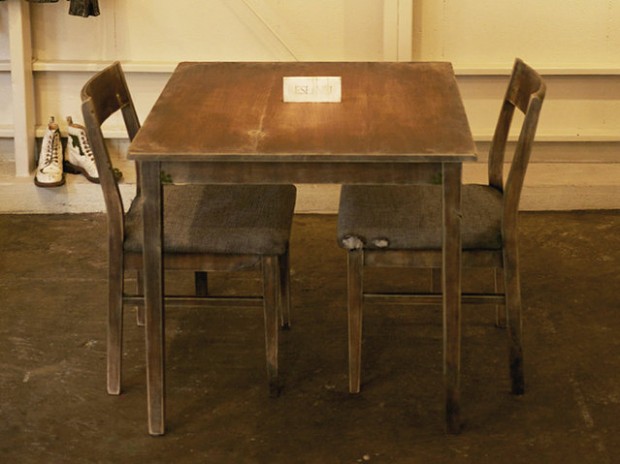
The concept behind Japanese artist Maico Akiba’s project “100 Years Later” is both simple and profoundly thought-provoking. What would everyday objects look like a century from now? Through a meticulous process of layering aging paint, rust, moss, and dirt, Akiba transforms ordinary items into futuristic relics that appear as though they’ve survived a post-apocalyptic world. The result is a haunting yet beautiful glimpse into the imagined future of material culture.
A Vision of the Future in Everyday Life
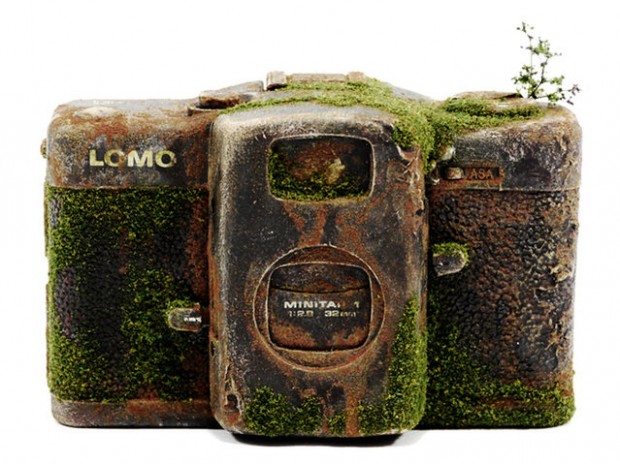
From stuffed toys and sneakers to cameras and household furniture, Akiba takes familiar objects and reimagines them as if time has left its heavy marks. Each piece looks corroded, weathered, and overgrown, yet the original form is still recognizable. This blend of nostalgia and decay invites viewers to reflect on the impermanence of material possessions and humanity’s impact on the environment.
The Artistic Process
Maico Akiba painstakingly applies layers of paint and texture to mimic the natural processes of aging and decay. Rust blooms across metal surfaces, moss spreads across plastic, and dirt clings to once-bright materials. The level of detail is so realistic that many pieces could easily be mistaken for objects excavated from a ruined civilization.
Why “100 Years Later” Resonates
This project resonates because it blends art, philosophy, and social commentary. Akiba’s work forces us to imagine the passage of time and what our consumer culture might leave behind. It’s not only visually striking but also a subtle reminder of sustainability, environmental awareness, and the cycle of creation and decay.
Maico Akiba’s Place in Contemporary Art
As a Japanese contemporary artist, Maico Akiba is celebrated for her unique perspective and technical mastery. The “100 Years Later” series has gained international attention for its originality and for sparking important conversations about the future. Each object becomes a story of endurance, resilience, and forgotten beauty.
Gallery – 100 Years Later Objects
Final Thoughts
Maico Akiba’s “100 Years Later” series is more than an art project—it’s a mirror reflecting the fragility of our material world. By transforming everyday objects into aged, apocalyptic artifacts, Akiba makes us reconsider how time, nature, and human influence shape everything around us. This hauntingly beautiful collection will leave you reflecting on the future long after you’ve seen it.